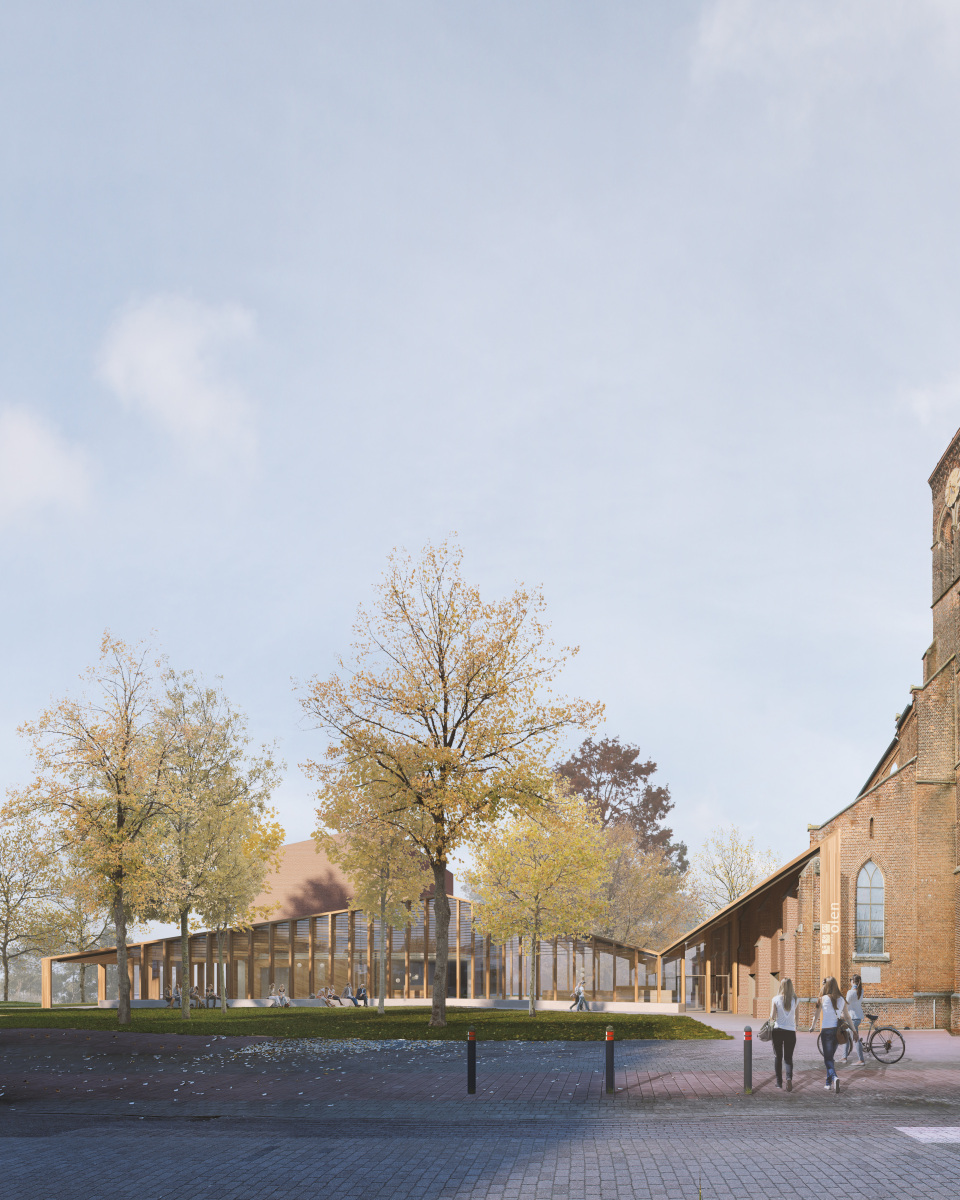
The Onze-Lieve-Vrouwekerk (Church of Our Lady Olen) occupies a prominent yet peripheral position within the village centre of Olen due to its scale and its location on the visual axis of the Oevelsesteenweg. The site acts as a catalyst thanks to its connection with the presbytery garden as a green transition zone and facing Boekel, an area with underused potential.
The design is based on a clear three-part concept and focuses on a flexible, sustainable and accessible public building that naturally embeds itself in its context and welcomes the people of Olen. The church is understood as a robust yet contemporary structure capable of accommodating new uses without losing its spatial qualities. To return the building to the community, a public function is chosen: the library. This programme is flexible and reversible, allowing the serenity, scale and spatial experience of the church interior to be preserved, without subdividing the space.
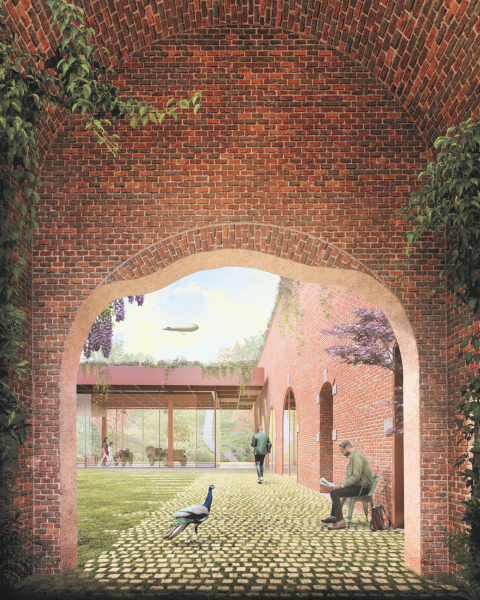
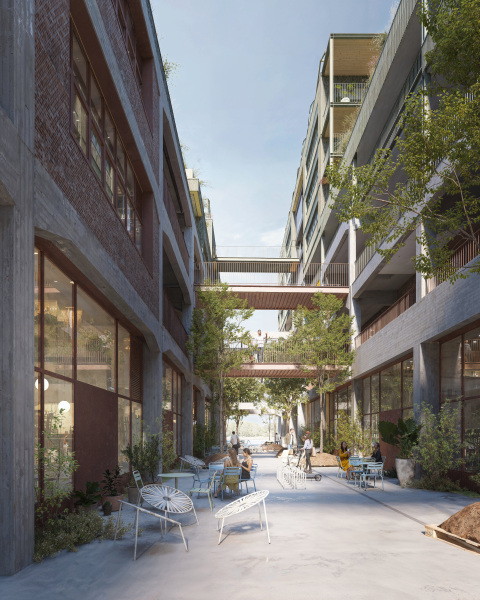
In addition to the adaptive reuse of the church, the project includes a newly built volume, also conceived as a skeletal structure with a fixed core and ready for future reprogramming. The new building echoes the massiveness of the church in a contemporary architectural language, with red-brown brickwork, a balanced composition of open and closed façades, and a reinterpretation of pitched roof forms. Its placement is guided by the preservation of the valuable tree stock in the presbytery garden, which is reinforced as a green stepping stone within the village fabric. Limited to a maximum of three storeys, the new volume affirms its public character without undermining the dominance of the church.
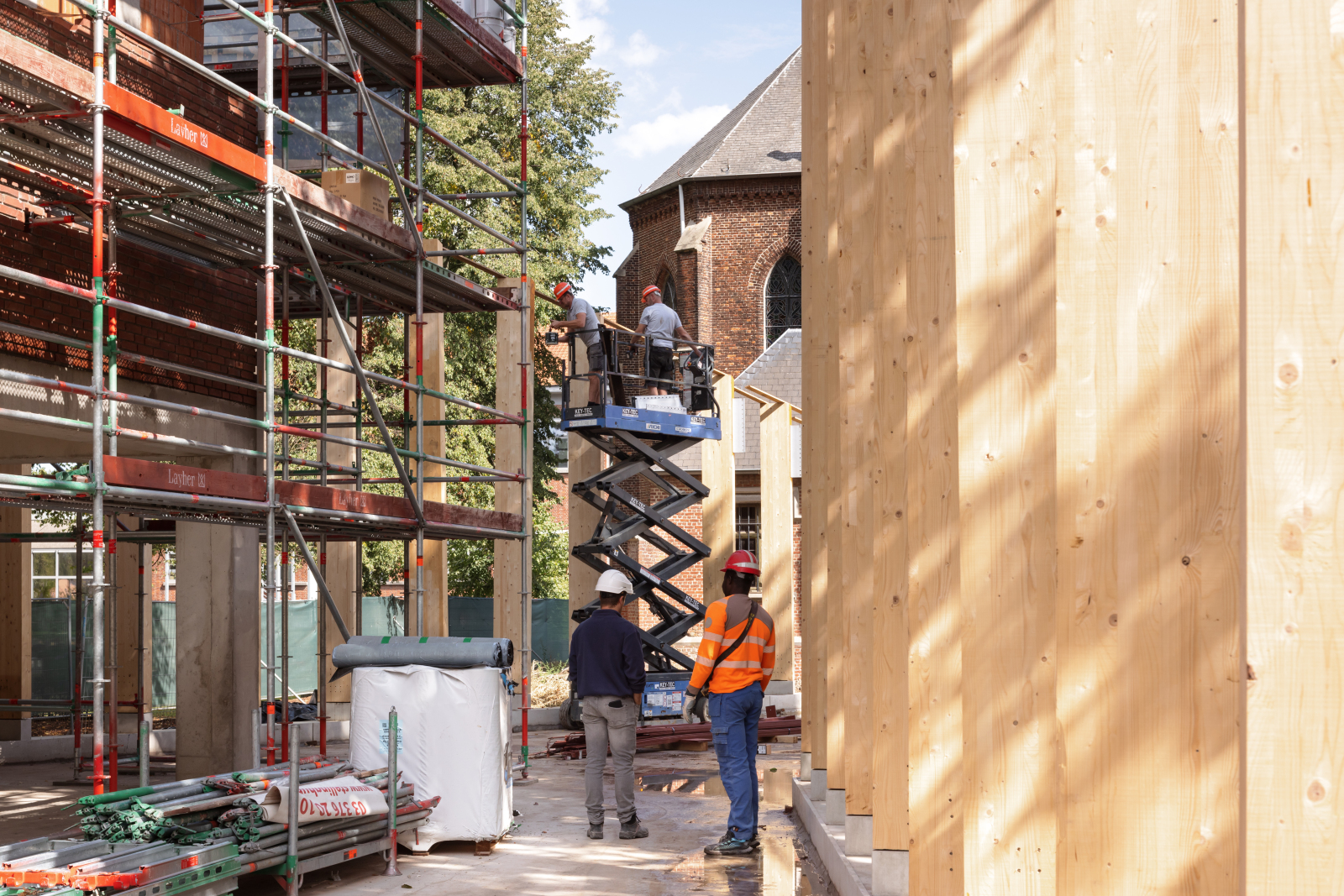
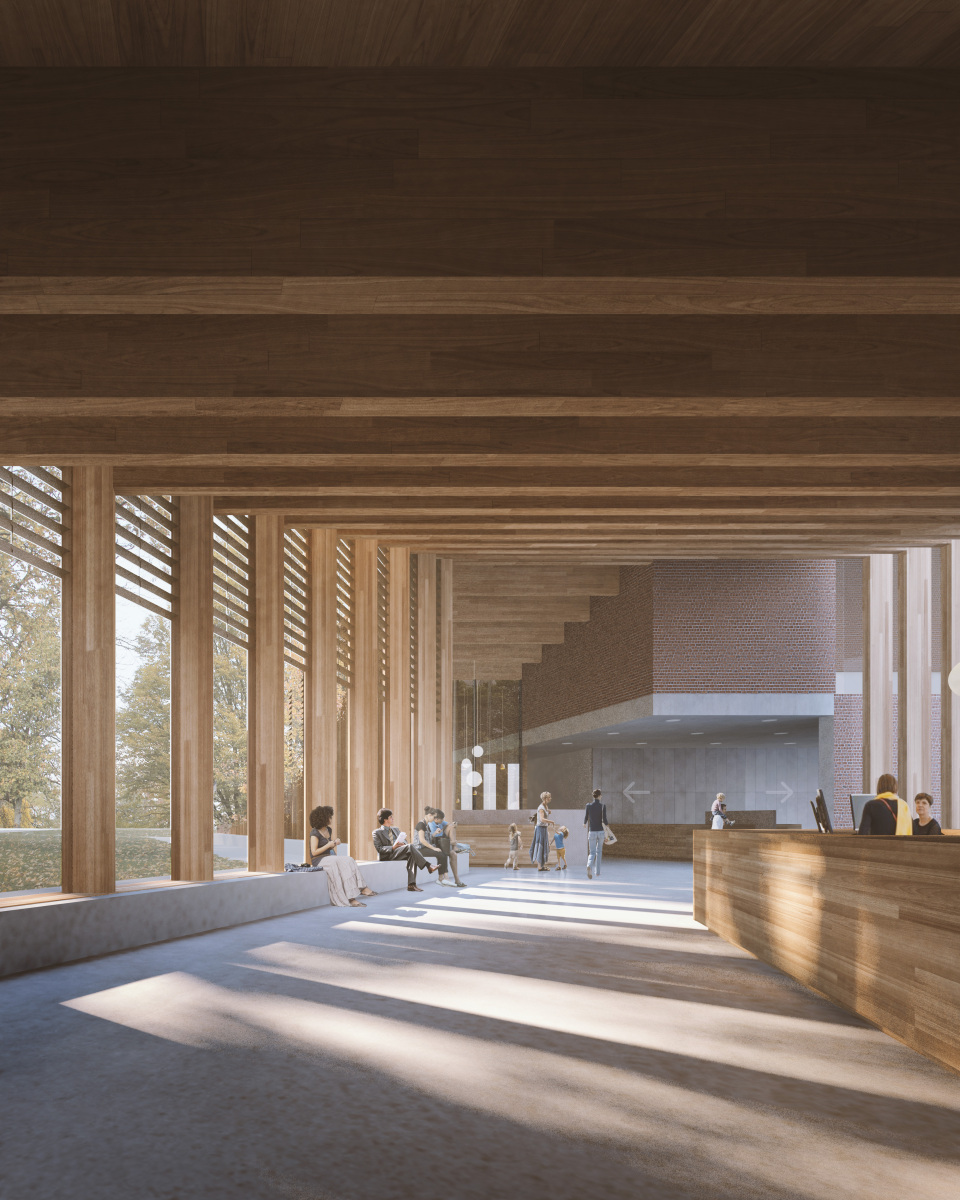
Church and new building are connected by a light, meandering wooden structure that weaves itself between the trees and links both volumes spatially and volumetrically. This connecting volume accommodates the public heart of the Huis van de Olenaar: a foyer for informal meeting, lingering and temporary uses such as exhibitions or receptions. Through the development of the site, a new dialogue emerges between building and landscape, breaking open the introverted character of the church. Church, new building, presbytery garden and cemetery merge into a single coherent landscape structure, with room for further greening of Boekel and a durable social anchoring of the project within the village.